
Termites vs. Ants: How to Tell Them Apart
Termites and ants can both form large colonies, and their winged swarmers are sometimes mistaken for one another. But they are different insects, with different body shapes and signs of activity. Here are a few clues that can help you tell them apart.
Taxonomic Connection Between Ants and Termites
Termites and ants both live in colonies, but they belong to different orders of insects. Termites are classified in Blattodea, the order that also includes cockroaches; ants belong to Hymenoptera. Their social behavior can make them seem alike, but body shape, antennae, and wings are more useful clues for identifying swarmers.
Quick differences between termites and ants
| Feature | Termite | Ant |
| Waist | Broad, without a pinched waist | Narrow, pinched waist |
| Antennae | Straight or beaded | Elbowed |
| Wings on swarmers | Four wings about the same length | Front wings longer than hind wings |
| Wood activity | Some termites feed on wood | Carpenter ants excavate wood for nests but don’t consume it |
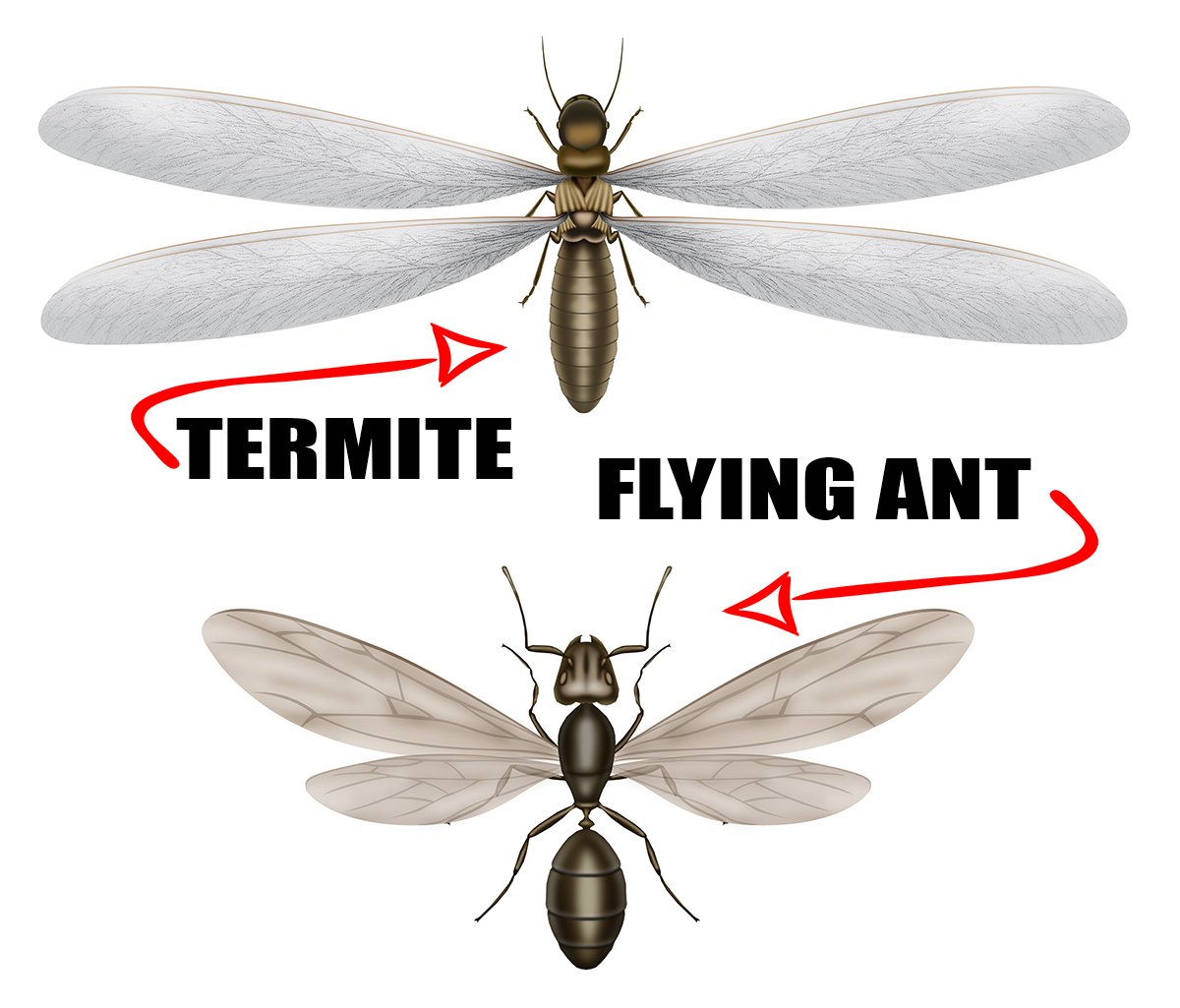
These features are useful clues, especially when comparing winged insects.
Termite swarmers have equal-length wings; ants have larger front wings and smaller hind wings. ipm.ucanr.edu
Do ants eat wood like termites?
Other signs to look for
Subterranean termites may build mud tubes between soil and wood. Drywood termites can leave small, pellet-like droppings near infested wood. Carpenter ants may leave fibrous, sawdust-like material near their nests. These clues can help narrow down what you’re seeing, but an inspection may be needed to identify the insect and assess the activity.
For more clues, read our guide to identifying termites in California.
If you find possible termite signs or aren’t sure what the insects are, contact Killroy about a termite inspection.